Friday, July 25, 2025

Black Sword Hack: Curio Tables

One of the delights of running Castle Xyntillan was the periodic rolling on the Curio table. This d100 list contained items mostly mundane but sometimes magical, silly and serious, which helped to construct the setting (16th-century Alps, in the campaign's case). Each week a couple curios would show up in the base town's shop, and on other occasions the curios would be found in the pockets of Company victims or arriving by post. The items served as little bits of game-able whimsy--moustache wax showed up the same week as a moustached replacement character--or utility, as the bottles of acid and egg grenade did. They also served as a money-sink for an sp=xp campaign. 

As Prismatic Wasteland argues, setting should be communicated implicitly via starting gear options and random tables. Since I am starting a new (fingers crossed) campaign with Black Sword Hack, I began making a d20 starting equipment curio list, one for each character origin, even though the origin story, backgrounds, and weapons provide quite a bit of world-building during character generation. But twenty didn't seem like enough, and it seemed as though these items might be useful for body looting as well, especially more mundane things that might not be the adventure results that the standard Black Sword Hack matrix offers. In the case of scavenging corpses (or maybe visiting a small kiosk in a market), 4:6 rolls on the expected origin table, rolling 5 or 6, however, draws from the other "exotic" lists. Items marked with an asterisk might require further elaboration by the GM.

Inspiration from the original Curio list by Gabor Lux, as well as his "Nocturnal Table"; elements of Gus L's house rules starting gear; items on ktrey's "Random Impedimenta"; Zzarchov Kowalski's "A Thousand Dead Babies"and probably a dozen whose authorship has been lost through table "Xeroxing." Thanks also to all the merchants who transited Afro-Eurasia early in the second millennium to serve the desires of consumers dwelling hundreds and even thousands of miles away from the origins of the status-bestowing products. These are, perhaps, a bit more mundane overall than sword-and-sorcery items should be. The number in brackets indicates slots for encumbrance (even though BSH does not have this rule).

Black Sword Hack Curios 

Roll

Barbarian

Civilized

Decadent

Roll

01

Amber Nugget

Abacus

Ambergris

01

02

Arrowheads, d6, Stone

Amphora, Olive Oil [2]

Arrowheads, d6, Glass

02

03

Baboon Face, Dried

Ankh Necklace

Bangles, Platinum

03

04

Bamboo Cutting

Arrowheads, d6, Silvered

Bird’s Nest, Edible

04

05

Bangles, Brass

Badge, Metal, Bird Relief

Blood, Gelatinous, Vial

05

06

Barb, Poisoned (1 use)

Bangles, Silver

Beads, Unholy

06

07

Bark, Curative (d6 hp/minor ailment)

Beads, Prayer

Blouse, Leopardskin

07

08

Basket, Reed, Woven

Bell, Small, Bronze

Bodice, Bone-Lace

08

09

Beads, String, Distant* Manufacture

Book, Devotional*

Body Part*, Sorcerer’s Shriveled

09

10

Belt Buckle, Mount*-Shaped

Book, Geography, Strange Things Noted in the [Cardinal Direction]

Book, Chirurgeon’s Manual

10

11

Berries, Staining

Bouquet, Dried, Odorous

Book, Demon* Summoning

11

12

Blanket, Camelhair

Bowl, Glazed Green Ceramic, Comical Bird Illustration

Book, Hagiography*

12

13

Blubber, Chewing

Brandy, Pint

Book, Lurid Poems*

13

14

Bone, Weird Animal*, Runed

Candles, Beeswax

Book, Skin, Tattooed*

14

15

Bonemarrow, Satchet

Cheese, Hard, Hunk

Camphor Unction (“Demon Brain Perfume”)

15

16

Bowl, Turtle Shell

Chop Sticks, Lacquered 

Candle, Bloodwax

16

17

Butter, Goat

Chutney, Jarred

Cards, Prophecy, Missing “Death”

17

18

Cactus Leaf, Hallucinogenic

Cinnamon, 3 Sticks

Carvings, Ivory, Depraved

18

19

Candles, Tallow

Clove Paste

Centipedes, Pets

19

20

Cape, Leopardskin

Coconut Milk, Bottle

Cloak, Spidersilk

20

21

Carvings, Wood, Prurient

Codex, Random Language* & Subject* [2]

Clockwork Rat or Songbird

21

22

Caterpillars, Bag, Fragile

Coin, Bronze, Smooth

Clogs, Skin and Wood

22

23

Chain 10’, Bone, Etched

Comb, Ivory

Cockroach, Sugared

23

24

Charcoal Stick

Coral, Colorful Branch

Cod Piece

24

25

Chew, Dried Leaf*

Cylinder, Clay, Cuneiformed

Coins, Funereal

25

26

Clam, Sealed inside* 1) pearl, 2) sand, 3) black gunk, 4) fishbones, 5) a key, 6) nothing

Dates, Palm, Dried

Cuttlefish, Dried

26

27

Cord, 30’, Palm Fiber

Devotional Wafer

Doll, Lifelike Eyes

27

28

Deer Cake, Fermented

Dictionary, Short, 2 Languages (Random)*

Dust, Powdered Mummy

28

29

Driftwood Branch

Document, Governmentt, Indecipherable

Egg, Reptile, Leathery

29

30

Dung, Animal*, Bag

Fan, Paper

Egg, Thousand-Year-Old (Food)

30

31

Ear Gauge, Copper

Figurine, Soapstone, Salamander

Embalming Fluid

31

32

Earthworms, Live, Pouch

Figurine, Lumpenmetal, A God*

Eye, Glass, Green

32

33

Entrails, Livestock [2]

Fingerbone, Maybe Holy

Eyeballs, Human, Jarred

33

34

Fat, Congealed, Jar

Flask, Empty

Feathers, Harpy

34

35

Feathers, Ostrich

Fork, Two-Pronged, Verdigrised

Figurines, Obscene, Jade

35

36

Fish Sauce

Furniture, Bamboo Footstool [2]

Fingernail Clippings, Curled, 6”

36

37

Fish*, Smoked

Game Pieces, Wooden

Furniture, Ebony Footrest [3]

37

38

Fishing Hook & Line

Garment*, Ink-Stained

Glitter

38

39

Fowl*, Small, Alive

Geneaology of Family

Grave Dirt

39

40

Fur, Ermine

Gin, Bottle

Glue, Pot

40

41

Furniture, Hassock, Goatskin [3]

Goldfish, Jarred

Hair Dye

41

42

Gourd, Calabash, Small

Gown, Voluminously-Sleeved

Hair, Human, Bundled

42

43

Grease, Pouch

Holy Symbol*, Lacquered

Hairpin, Poisoned

43

44

Hand, Severed, Dried (5:6 human, 1:6 ape)*

Holy Symbol, Forgotten Cult*

Hook Hand

44

45

Hat, Wool, Knitted

Hose, Silk

Hookah [2]

45

46

Herbs, Fragrant

Incense Clock

Hourglass

46

47

Hide, Partially Tanned, Stinks

Ink & Quill

Incense Thurible

47

48

Honeycomb

Instrument, Rhubab/Guimbris/Fidel

Jellyfish, Dried, Sting!

48

49

Horn, Drinking

Jawbone, Saint’s

Kaftan

49

50

Incense Sticks

Jhodpurs

Lemur, Taxidermied

50

51

Ingot, Tiny, Brass

Key*, Ornate

Liver, Shark

51

52

Instrument, Flute, Bone

Kindling, Aromatic, Sandalwood

Lotus* Powder

52

53

Instrument, Sheepskin Drum

Lamp, Tarnished

Lubrication, Snail

53

54

Jerky, Livestock*

Locket

Manacles

54

55

Kelp, Still Moist

Map*, Hastily Sketched

Mask, Domino

55

56

Knife, Sacrificial, Snake Coils

Mustard, Satchet

Mask, Leprosy

56

57

Lizard*, Small, In Pouch, Live 

Nightsoil, Processed, Pouch

Mead, Honeyed

57

58

Locust, Smoked, Bag

Notebook, Blackmail Material*

Mercury, Vial

58

59

Mask, Witchdoctor

Nuts, Betel

Mirror, Silvered

59

60

Mica, Small Sheet

Painted Cakes

Monkey, Pet

60

61

Mushroom, Poison

Papyrus Sheets

Noose, Silk

61

62

Musk, Polecat

Paste, Sweet Black, Jar

Nuts, Testicles of a Eunuch

62

63

Necklace, Ape Teeth

Peppers, Dried, Very Spicy

Painting, Oil, Portrait

63

64

Necklace, Cowrie

Pipe, Wooden

Pantofles, Felt

64

65

Necklace, Crocodile Teeth

Playing Cards, Marked

Paper, Scrap “Please Let Yunis Get Fucked” Scrawled

65

66

Nuts, Mongongo

Pot, Cooking, Metal

Pastry, Honeyed with Pistachio

66

67

Obsidian Cutting Tool

Prayer* Slips, Leather Neck Pouch

Paw, Mummified (Random Beast*)

67

68

Ochre Paint

Prints, Woodcut, Indecent

Peaches and Pears

68

69

Paste, White Oxide

Purse, Cut, Secret Pocket

Peacock Tail

69

70

Pillow, Moss

Receipt, Substandard Copper Ingots

Perfume, Overpowering

70

71

Pot, Large Seashell [2]

Recipe, Fish Pate

Pickled Meat, Jar

71

72

Purgative, Herbal

Ribbon

Pie, Eel

72

73

Resin, Tree, Flammable

Ring, Signet

Plate, Embedded Skull

73

74

Rhino Horn

Rope, Knotted, Hemp, 30’

Poppy, Powdered

74

75

Roaches, Jungle, Fried

Rushes, Fat-Soaked

Potion, Virility

75

76

Runestone, Tiny

Salt Cellar, Ivory, Tribesman Relief

Prosthesis, Wooden

76

77

Saddlebags, Woven

Scalpel

Punch, Eggmilk

77

78

Salt Block

Sculpture, Glass, Fragile

Puzzle-Box, Engraved, Wooden

78

79

Sand, Pink, Glassy Granules

Scytale

Rat, Live, Bagged

79

80

Scorpion, Live

Slippers, Dancer’s

Recipe, Roasted Dormice

80

81

Shrunken Head*, Human (2:6) or Monkey (4:6)

Smock

Robes, Mothsilk

81

82

Skull*, Tiny, Fragile

Soap

Robes, Worn Important Organization

82

83

Snakeskin

Songbird, Tropical, Small Cage

Rope, 30’, Silk

83

84

Snare

Spectacles

Rouge and Kohl

84

85

Spidersilk Pouch, Dried Rodent Inside

Spicy Paste, Jar

Saffron, Sachet

85

86

Starfish, Dried

Spindle, Wooden, Thread

Sand, Fine, Bag

86

87

Statuette, Bronze, Frog, Crude

Spyglass

Scarab

87

88

Sticks, Painted


Statuette, Random Beast*

Scarf, Sable

88

89

Stomach, Sheep, One End Sewn

Tea, Powdered

Scroll, Ravings

89

90

Sugarcane Cutting

Thimble, Tin

Smelling Salts

90

91

Teeth, Blackened, Loose

Tiles, Game

Snail, Pet, Silvered Shell

91

92

Testicles, Buffalo

Title, Expensive Obligations

Statuette, Basalt, Frog

92

93

Tool, Knapping

Token, Wooden, Monkey Relief

Statuette, Random Monster*

93

94

Trophy* of Defeated Enemy

Tonic, Sour, Inefficacious

Tadpoles, Jarred

94

95

Trousers, Yak Fur

Toy, Wooden, Crocodile

Tincture of Birthwort

95

96

Tuber, Pale, Fibrous

Turban, Cotton

Toad, Mummified 

96

97

Unguent for Pests

Wax Seal, Personal

Umbrella, Paper

97

98

Warhorn, Antelope

Wax, Bees’

Veil

98

99

Wine, Mango, Wineskin

Wig, Human Hair

Wine, Pomegranate, Ewer

99

00

Yoghurt, Liquid, Pouch (3:6 alcoholic)

Wine, Vinegar, Jug [2]

Wine, Truffle, Bottle

00


Sunday, July 20, 2025

Xyntillan Retrospective: The Phases of the Campaign

Spoilers for the dungeon are below.

Attendance 

This, perhaps, should've gone in the stats post. I'm fairly sure the original invitation to the campaign included fourteen people, of whom ten expressed interest, from which seven played, with three stalwarts who showed up to dozens of games. The top player had 48/51 appearances, followed by 40/51, and 34/51. Only one person showed up for only one session and never returned (which was quite different from the Xyntillan I played in, wherein we had at least a dozen one-and-dones). The players weathered two job changes, a cross-country move, and a wife's brain surgery in real life during the year, the last of which took out someone who would've been a stalwart, I think, otherwise (he made 7 of the first 9 sessions). I ran a lot of duets, and three days of solo (with lots of retainers and hirelings), when there was a last-minute back-out from a planned session. The mode of player attendance was probably the duo, the mean 2 2/3 players per session, the maximum five.

Phase 1 (1-9): Prodding and Poking the Entrances

The first session saw a tiny haul, 10 sp/character (on an sp = xp basis + exploration xp awards, not nearly as generous as 3D6 DTL), one PC and one hireling death, and some hiding in the dark and running away after a random encounter snuffed the torchbearer and the torch. The Company was jokingly given the name "Sneak Sneak Boom," which stuck despite one Sneak dying in the first episode, the second Sneak perishing during the 27th session, and Boom only completing four full and three half sessions. The second expedition was nearly slaughtered by a very dangerous room--there was a mid-session roll-up of a new character--but had some success in recovering treasure, although not near enough to level. The party met again the foe that had killed the first PC, but got a 12 reaction roll from her, and, coincidentally, for the rest of the campaign would always get double-digit reactions rolls from that Malévol, the family that ran the place. The third session, "The Value of a Good Porter," recovered the first magic item that was consumed to no effect, and featured lots of hiding (and reasonably so). The fourth session was a haul, despite a load of caution, and resulted in the first two PCs leveling. It had started disastrously, when the new cleric failed to turn skeletons in the very first encounter, and all three hirelings were lost (one to friendly fire, one to enemy action, and one to morale failure). The fifth session started similarly: all hirelings slain, two PCs damaged exactly to 0 hp, aka out cold in my rules, and the situation warranted that the killing monsters (undead servants) buried the bodies when the one survivor fled. Two newly rolled characters, including the one who became the biggest XP-getter of all by the end, "happened by the Castle," and the KOed were recovered, along with a little treasure, including the first magic weapon gained. All expeditions to this point had been taking the same entry point into the Castle, and for the sixth expedition, "The Eyes (or Irish) Have It," a new tack was finally chosen, maybe because five PCs had showed (the acrobat was now 3rd level, too, and one fighting-man 2nd). Here, the party entered the lower level for the first time, came in touch with what I regarded as the central mystery of the module, and killed their first Malévol. The party also used the environment to begin killing monsters. The seventh session entered the third main entrance of the Castle (and found another way to the basement), and the eighth--which had all non-first-level characters for the first time--led to the first face-to-face encounter with a vampire, which slaughtered every hireling. A discussion with ravens on the way out gained some intelligence about the place, since the druid had a spell left during the retreat. The ninth sortie saw a decent return and the use of a discovered loop to flee two different foes.

Phase 2 (10-27): Targeted Looting, Systematic Mapping, Duets Especially

The tenth session saw a return to first-level characters for the first duet expedition, one PC which would never be played again (the only cleric who survived the campaign, and managed to turn ghouls at first level), while the other wouldn't level until the 43rd episode. Duets would become the dominant expedition until the 29th session. Although the players had deliberately aimed a bit for the wealthier portions of the Castle prior to this phase, they became much more oriented toward treasure extraction and mapping Xyntillan's rooms. Maybe this was happening because it was easier to get two to decide on a direction or goal. The sixth player joined the campaign at the eleventh session, for two sessions that were a treasure lull, and non-duets. He left following the twelfth session, "Stuck Doors," after his first-level illusionist was level-drained (my level drain is milder than RAW, but still substantial, especially for a PC with only 127 xp), when the wand of fear he wielded didn't work on a wight. I generally don't run "mythic underworld" doors, except in areas like the greenhouse. The party was initially very careful about their escape route, wedging the first two doors open, but forgot the procedure with the third and crucial portal--which the fighter failed to open (50-50) when they began fleeing from the monster. The wight was actually defeated with some lucky holy-watering, but another frightening encounter showed up at the noise, and the surviving party members scattered. The bard blew a hole in the ceiling of the greenhouse with his musket, then fled into darkness, taking his chances on the Table of Terror, rather than a second fight (and it worked out). The acrobat supped a just-purchased flying potion, and lifted the fighter through the hole in the ceiling to safety. Coincidentally, the party was able to avoid the ambush waiting for them at the entrance of the Castle. 

The players resumed first level characters at session thirteen, presumably sturdier ones, a barbarian and a dusty cleric, who would level with the xp from the mission.  The next few sessions accrued large amounts of xp--one with almost 3000 per character, and more for those who caroused, including the returned Irishman who ended up with a blasphemy tattooed on his member. A potion of treasure-finding was not deployed as well as it might have been by the players, but they located a half-dozen serious distinct hoards (that they wouldn't get to until much later--but they got four of them). For a while, Brother Barry and the barbarian ranged across the basement and then an unexplored portion of the main floor, hoovering up treasure, cutting a swath through lesser foes, and gaining levels rapidly. The party were finally ambushed by "the Glad Lads," as I'd dubbed the men of the Robin Hood-ish Malévol, as the dice decided. On the first exit under fire, a porter with paintings went down, left by the characters. During the second ambush in consecutive weeks, each PC came within an arrow's impact of dying. The players wanted to hunt the bandits, and a couple sessions later got their wish, getting ambushed on the way in for a change. The fresh party killed the leader and routed the others. The Company was now choosing to fight, and were mostly successful with the strategy, and pulled more than 4000 treasure xp per PC during session twenty-one, "Leave a Goat, Take a Goat." Then the Bar-Barry-an duo ran into a succubus, which drove the cleric temporarily mad. An alternate duo--the mid-session replacement druid, and an up-jumped retainer (when his boss was petrified)--found the Indoornesse, the secret extra-dimensional forest. They were repulsed quickly by a random encounter in the pocket dimension, but the elevated paladin often became the center of the story for a while: Episode 24, "Hans Thrice Defeats Death." The repeated success during combat led the players to get sloppy, and the cleric-acrobat duo--the highest leveled characters in the campaign at that point--met their end in session twenty-seven, with a bit of bad luck (a couple criticals against), but also lackluster deployment of their abilities and magic items (including one that might have one-shotted the foe). The PCs were surprised by a random vampire--which they had defeated before, but not staked--while looting a different vampire's bedroom. This was the only true TPK of the adventure, and they were the only non-level-ones killed for good. I left the bodies as recoverable, tossed out of the bedroom by the servants, but the players opted to bury the dead, not try and find a way to revive them. (The vampire had only claws, no head, so there was no chance the dead would turn.)

Phase 3 (28-39): Successes on a Razor's Edge

The next phase was feast or famine, and seemed to be just on the cusp of disaster at all times. The first session ended with an ambush by a reconstituted bandit crew (now the "Cheery Chaps," led by a former hireling). The druid, who had been feeding the ravens a goat every mission, was knocked unconscious during withdrawal, and being wheelbarrowed out when the Company was waylaid. I ruled that the ravens would not try to eat him. The unarmored NPC rescued during the excursion was within one bowshot of dying when the bandits were dispersed. The NPC then rewarded the party with a useful item for the druid. At this point, the party had caused enough mayhem that the Malévols began arranging ambushes that greeted the party, though there was usually an untrapped entrance. A lycanthropic mauling and harpies' songs did not lead to a TPK, nor did a recurring specter, which killed a first-level PC and hirelings, and drained some others. The giant skeleton cracked one character's skull and the most powerful vampire led an ambush--though she was slain almost by happenstance. The latter half of this phase was marked by finding a magic item that could summon a shambling mound, and this "Sir Charles" (mocking the Holy Roman Emperor, see) became the lifesaver, even defeating more than one reaper.

The Company got more powerful though. They found their first family heirloom in session thirty-one, "The Pickled Mind Pays Out." They made awkward friendships with family members, Eustace, Girolamo, Gregor, and "Uncle" Montfort, whose hallucinogenic candy they sampled. The seventh player joined for a single session that recovered not a single silver piece: "Money Sling (But No Money)." He did not enjoy the playstyle focused on resource-gathering, the encumbrance, the crawl. The players revisited a bunch of areas left uncleared and went a whole host of directions, and by the end of this they finally made it to the lake tower, to receive a quest from the Crusader Malévol, promised back during the thirtieth session. The party had crossed over the threshold of insulting the family further, and the family council had gathered to repulse them.

Phase 4 (40-51): Defeating the Anti-Druid, Finding the Grail
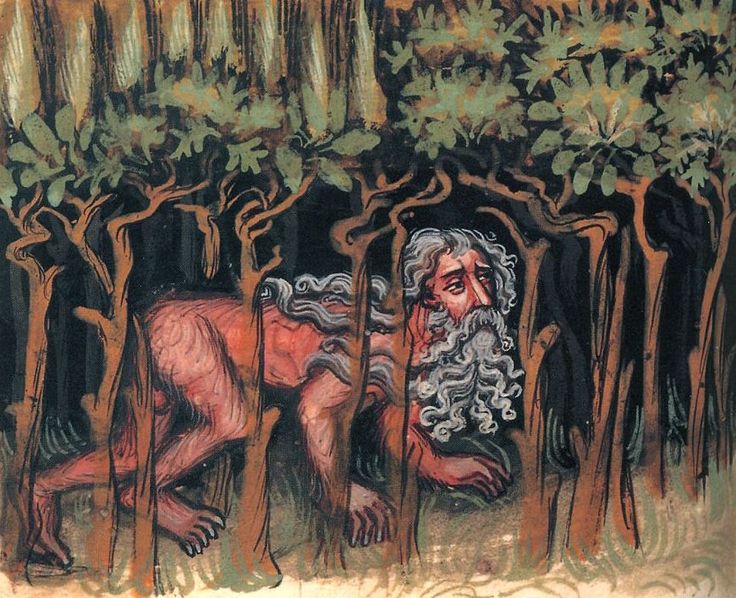
Just picture a *very fancy* crown atop this guy.

"A Bad Idea, But A Fun Idea" led off the home-stretch, with a stealth mission into the lake tower, and a the second battle (and fourth encounter) with the anti-druid Runcius, who had now become a recurring foe. In the subsequent mission, the rezzing specter was killed for a third time, and the party focused on the northeast of the Castle and the Indoornesse, where Runcius resided. During the forty-second episode, "Sometimes You Get The Owlbar; Sometimes The Owlbar Gets You," the party's druid ended up hiding and invisible among rotting hams, as Runcius' crew got the better of the Company. There was a short vengeance tour of the upper floors, and then the party focused on the basement and the beyond. They killed Runcius twice and with some finality (taking the third heirloom), and found the specter's great treasure and heirloom (fifth), which destroyed him, sandwiched around missions to recover the dangerously locked-up fourth heirloom. Hans finally had a retainer survive beyond first level. Session 50, “Pits, Pervo Priests, a Piper, and the Pendulum," held on the year anniversary of starting the campaign, was a failed search for the grail, the party trying to solve a puzzle they didn't need to. During the next mission, they found the artifact's location, aced the four major traps (failing a minor one) and crushed the ultimate guardian, obliterating a 60-hp, AC 19 creature in a single round (with no direct magic). The grail was recovered, but the Company had to make it past the final encounter, a 1 in 6 I let the players roll. This was Aristide, the Lich of the Castle, whose reaction roll was a 4 on 2d6, modified +1 for average party Charisma, still a negative result. The creature, however, per module rules, had a 1:3 chance of ignoring the party anyway, and another 1 was rolled. Perhaps I should've made him note that they had the Grail, and resisted their exit, but I did not. The party ended the last session of the campaign as they had the first, fleeing the Castle full speed.    


Saturday, July 19, 2025

Xyntillan Retrospective: The Numbers

There are spoilers for the dungeon below.

PCs
Total class Appearances (sometimes 2 in one session)


Druids (2) [36]
Paladins (2) [34] 

Barbarian [16]

Clerics (4) [15]

Acrobat [13]
Thieves (4) [14]
Magic-User [11] 

Fighters (3) [10]

Miner [8]

F/M-Us (2) [7]

Bard (2) [6.5]

Illusionist [2]


(No Assassins, F/Ts, Knights, Rangers, or Skirmishers attended.)


The highest level achieved, by class: 7 (Druid), 6 (Cleric–who then died, never having cast a 4th- or 5th-level spell), 5 (Barbarian, Acrobat, Paladin, Thief), 4 (Miner), 3 (M-U, Fighter), 2 (Bard), 1 (Illusionist, Fighter/M-U). The two highest-level achieving PCs were basically hasty mid-session replacement roll-ups. One of the 5th levels was a retainer whose patron was incapacitated. The only PC from the first session that survived the campaign ended up at level 2.


Thieves and Bards had a 50% mortality rate. Clerics had a 75% mortality rate. Acrobats, Illusionists, and F/M-Us had a 100% mortality rate, something about getting to the front line to use wands.


HIRELINGS

109 armed hirelings were employed by the Company. If my records are correct:

  • 72 were killed.

  • 1 was polymorphed, unpolymorphed, and then killed.

  • 2 were petrified.

  • 6 vanished without returning (1 later seen dead in a cell).

  • 1 vanished to return as a minor vampire.

  • 20 survived to retire, including 2 who vanished then returned.

  • 1 defected to the Glad Lads.

  • 6 were promoted to retainer (3 of whom died.)


Porter numbers are lost to history, though they began with Jacques (session 3, “The Value of a Good Porter”) and ended with Jensen (session 51, “The Holy Grails”), both deceased.


ENCOUNTERS

124 standard random encounters were rolled, just under 2½ per session, the peak being six, the least being zero. Dozens of room-based randoms and at least 7 in the Indoornesse also occurred, as did a few that I invented along the way.


55 official Malévols were encountered, if you don’t count the portraits and busts. Merton, A Silent Wail, Leopold, Meandering, and Agenor were never met.


28 Malévols were killed by the party (or their actions), four of them two or three times each. The party’s infraction points totalled 25+ at the end.


INFORMATION
Rumors learned, approximately: 167 (14 of them fully false).


Rooms left unexplored: 12 in the basement, 3 in the lake tower, 2 in the donjon, 15 on the upper floors, 13 on the main floor (counting 8 for Aristide’s lab complex), and 13 sites in the Indoornesse.


TREASURES
Five Malévol Heirlooms were recovered, plus the Grail.


I am not going to sum up how much loot was extracted from the Castle, but the first session’s (“Into the Darkness”) haul was 4 sp, a silver dagger, and some worthless mushrooms, while the last session recovered 61 10-sp gems, a Helm of Reading Languages and Magic (by the illiterate barbarian), the Black Book of Xyntillan, a Staff of Healing, and The Holy Grail.


WRITING

Total number of words in the prose recaps: a little under 110,000. (Longer than three of the Harry Potter novels or The Hobbit, but not so long as The Adventures of Huckleberry Finn.)


Saturday, July 5, 2025

Roleplaying As Yourself

Me, Myself, & Eye

Everybody, on some level, roleplays themself. I am writing about making your current player self into your actual PC, or something close to that. 

I was introduced to Delta Green as a player about two months ago. The first session was humdrum, meant to train the players on the ruleset and apparently make clear that the Delta Green world is an ominous place filled with implacable, cosmic horror. The scenario really felt like character choices didn't matter. Plus my character was kind of a drab pre-gen, military meat-head guy, which--at least for me--has a limited number of role-playing pleasures. 

The handler said we could change up characters, so I rolled myself up for the second session.

It wasn't quite me. I tried to give myself accurate stats and skills, but I changed his timeline so that his major career failure was somewhat different than mine, and also was the reason he joined Delta Green, the organization. (My real-life occupational disaster did not lead me to joining an institution dedicated to the suppression of cosmic evil, unless you consider the School District of Philadelphia to be such an organization.) PC me also remained bonded with people I've lost touch with in real life and he "believed" in the occult (sensibly, in the Delta Green milieu). 

The second Delta Green session was probably my favorite as a player this year, out of forty plus. 

Some of that was attributable to the differences in the modules, but the second, "Last Things Last," in the most recent rules quick-start, was just about as railroady as the first. There's only one big player choice in the scenario, and that choice--however fantastic it is to have been placed before the players--is almost written to undermine the impact of said decision. The basic activity of "Last Things" is investigation, however, rather than merely surviving, and that was pure joy as myself.

When our PCs were trespassing, it felt as though I might get caught, arrested. The frisson here, the bleed, made every minute the characters spent digging through useless clutter exceedingly tense. I spent several minutes of unnecessary role-playing to cover up my tracks after an encounter, because I didn't want myself to be imprisoned for some dumbass evidence that could be tracked back to my home. When the big choice and the fight for survival came, it felt like it was really me (until I rolled a crit throwing a hatchet, that kind of broke the immersion). When I went through the "home" session, it felt like I was really lying to my wife.

That night, after the game had ended, I immediately made plans for running the scenario for my main group (and introducing them to Delta Green). And their pre-gens were gonna be themselves.

The Experiment

I ended up running the little adventure twice, for two different groups: the "main" (seven years' running) and an "open," two brothers (my cousins whom I've gamed with on and off for years) and a local who'd gamed with one of them once online. The players were given the instructions to imagine themselves with some great live upheaval at age 25, to explain joining Delta Green. Their 25th year was also to be set in 1993 (which didn't quite work for the non-twin brothers). 

Everybody took to.their alternate self in some fashion. A couple made comic variations on their real personas (including joking bonds), but pretty much everybody was pretty serious about giving themselves "accurate" skills and ability scores, including giving themselves what they considered realistic weaknesses. One example: "Member of Catholic Church, mother was church secretary. I completed confirmation class, was an altar boy for about 5 years. Attended Catholic mass just about every weekend during college. My occult should be 30%." Two created alternate selves with tragic backstories, one killing off the game version of his parents (who had been assassinated), and one his game wife, pregnant with his first child (who has in real-life finished graduate school). Both of them did this with the intent of connecting the personal catastrophe to some as-yet-unknown supernatural force. This was even though I declared the session to be a one-shot at the outset.

During the sessions, the players imagined themselves in the game world in two different fashions. One group wanted to role-play as they would have if the horrific game event had occurred to them in real life. The other group role-played as an alternate self given a chance to be very different than the normal. Some used real-life backstories to negotiate skill rolls even further than the base score. Most felt as I had, not wanting their alternate self to get caught during the investigation, more so than even a standard PC.

The "main" group completed the adventure successfully in the terms of the scenario. The "open" table group was struck with disaster--they were very careless with one object, and the cascade of trouble that followed left one PC dead and the other two in game world prison. The successful group also had a form of failure. Two of the players reckoned that their real-life reaction would be to immediately quit Delta Green, and so their PCs did. One was role-playing a reaction to the horror, and the other to his own ineffectiveness doing agent-type things against dangerous cosmic entities. The first group seemed ready to play more Delta Green, though whether because of the freshness of genre (we've done Traveller and Pirate Borg, the latter to great enthusiasm, the former abandoned) or the experiment in character, it is hard to say. Perhaps because the second group ended the session on a down note, there was no discussion of revisiting the genre, but one of the players sent me an email about the nice change of pace. 

Cautions

I didn't think too carefully about unpleasant "bleed" before I ran players as themselves. This thoughtlessness was for a couple reasons. First, even though my play-through as a player seemed to have great danger, no character died. After reading the module, I realized that the central monster pulls its punches (seemingly mainly as a set up to become a recurring campaign problem), so I foolishly didn't think the characters that I was running would get themselves killed. Second, I am in a relatively comfortable place in life, with finances as stable as they've ever been, and no difficult or strained family relationships. When my "me" PC probably should've died during his second adventure ("Convergence") through no mistake of his/my own--the module had a bit of a cosmic horror railroad for one PC--I was at peace with him perishing, as it seemed fitting for the genre. My GM was probably too gentle with the final outcome. Admittedly, the lack of substantially character advancement (in duration, four sessions, and system, a few skill points) would have made his loss more bearable, had it happened. 

The same is not true of all of my players. The player of the PC that died because of risky behavior might have been reacting in game to some of his current real-life frustrations. Then again, in another short-shot I ran, a different character of his deliberately finished the adventure with a similar self-destructive move. (He destroyed an infected NPC because he was an asshole, not because he was infected, surprising all of the rest of the table that his PC's suicide had been for a petty grudge.) Others in my play groups face job loss, upheaval in living situations, and elderly parent care that is stressful. Of course, any beloved character's demise in an RPG could be worse with these conditions, not just a very familiar avatar. 

I nearly always write a re-cap of sessions played, but this was the first time a killed PC bore a real name, that of my cousin. Copying my own Delta Green handler's method, the story was told through documentation, pretend newswire articles and internal DG memos. It was rather dark writing one of those tragic post-mortem newspapers interviews with my "uncle and aunt" as the subjects. Because I had gamed with everyone in the sessions for more than a year, I didn't bother with any safety tools, which may have been a mistake.   

There is, of course, the common RPGing goal of getting away from our real-life self through role-play, and this escapism might be confounded by playing oneself. There's also the power fantasy that draws many to our games--which I've been trying to get further and further away from in my own gaming experience--and for this reason players may balk at playing "themself," although the method could certainly be wrenched into an extreme version of the fantasy. And speaking of that, this will only transfer easily into "modern" games, rather than the standard fantasy or SF RPG, making the PC self mostly limited to certain rulesets and settings.

Sunday, June 22, 2025

Review: The Dying Light of Castle Whiterock

I will almost never be on the cutting-edge of TTRPG play: I prefer that others undertake the effort of sorting out chaff. However, my FLGS requested GMing for Free RPG Day, and I thought it might be a way to meet local nerds not beholden to the 5E behemoth. I requested and received the DCC teaser for their upcoming kickstarter to finance the re-release or remake of the Castle Whiterock megadungeon. I had no knowledge of the original Whiterock, but I have run more than fifty sessions of Dungeon Crawl Classics across three different short campaigns. The short adventure "Dying Light" does not seem to have any direct connection to the megadungeon, strangely.

I got the module five days prior and read through it twice, the second time writing up two pages of my own shorthand to condense the fourteen or so pages. (I also painted a couple miniatures for the session.) Like any good (annoying) recipe user, I changed some of the ingredients. Mostly this was to provide more signposts and telegraphs for the players about the danger they were in for.

Six players joined the table, though never more than five at once. Three were DCC virgins; two of the others brought their own Zocchi dice. They were good players, thoughtful about the clues provided, game for the challenges (and character deaths/doom), and role-players of the in-game quirks (their PCs' unusual gear, the dungeon detritus, the odd DCC table result). The game was distracted often by store patrons' interruptions, three player departures, and a four-alarm fire in the vicinity (the door to the store was open to the four-lane road out front). The session ran for three hours and twenty minutes.

As the GM, I made several errors. I completely forgot the elf's mercurial magic, forgot (and forgot to look at my notes for) the dialog snippets I'd prepped for the most communicative NPC, left out a couple of mostly flavorful bits of dungeon dressing, probably adjudicated a player idea poorly, and broke the fourth wall about the central puzzle. I thought my additions were good, though: incorporating a sliver of the backstory into one of the PC's one-sentence bios; providing a low leverage opening encounter that helped the players piece together the sinister goings-on; telegraphing some of the traps; adding several scent clues. My subtractions were good, too, I think, shaving any "boxed text" to the barebones and dispensing with ponderous player-facing backstory. 

Overall, as is fairly common with DCC, the adventure relies too much on combat, especially for a putative one-shot. There are three encounters that require fighting, and two that probably don't, but could. The centerpiece puzzle is far too much like the really anti-immersion ones that have plagued mainstream published D&D since at least "White Plume Mountain." The map is rather linear, but that's fine for an abbreviated adventure. There is one dead-end time waster, and a very secret door that even when learned about is supposed to be hard to find, but must be passed through to complete the adventure.

The opening trap is little nonsensical, but leads to a very good first encounter. The first real room is a trap, a social mini-game, a bit of exploration, and a potential conflict. The players get a chance to poison themselves (and mine gladly did so), be suspicious, but interrogate an NPC lightly, and roleplay their characters. The results of the poisoning are a wonderful table, and very DCC. The second scene is solid. It's got horror, a chance to show off investigation chops, and potentially a revelation that the characters may be doomed.

The third encounter is another reveal, hidden minor magic, and two info dumps (one hidden), including a player handout that runs pretty long. The information is mostly non-actionable. It's a clarification of the backstory, but not helpful to solving the centerpiece puzzle, even if carefully read. The fourth encounter is a simple combat with another info dump (the 2nd player handout), and a very hidden magic item, which has only the most abstract clues about in the room and the rest of the dungeon. The fifth encounter is an unsolvable puzzle, a double trap, a potential but avoidable combat, and the slim chance of social play. My players spent some time offering up a pair of solutions to the insoluble challenge, which made play drag a bit. The trap set off the first moment of PvP, but I allowed a peaceful resolution. 

The sixth encounter is a combat encounter combined with a "brainteaser" that can't be solved until the literal gatekeeper gives up the necessary clues. (I just dispensed with the monsters as we had already lost two players, and another one needed to leave for work.) The referee is instructed to hold onto the clue doggerel until the players do one of a pair of very specific requests. The gatekeeper more-or-less says, nonsensically, "No you mustn't release ancient evil, but here is a poem puzzle to solve to do so." Barring some zany spell table result, the climactic encounter and adventure conclusion is unreachable for first level characters if the puzzle remains unsolved.

The final battle is fairly interesting, with stages, a differentiated battlefield, player choices, and a monster with hypnotizing powers. Of the four remaining PCs in my session, half lay dead on the floor when the "boss" went down (both had consumed luck in the fight, so neither were revivifiable). 

The creepiness of the opening encounter is commendable, as is the dread built upon the PCs' poisoning and the second "scene," but I can't recommend the mini-module overall. Maybe with a major rewrite of the brainteaser and the information to get the players through that, but that would be quite a bit of work. Still, it was mostly a fun time, thanks to a few wacky dice results and especially due to the creativity of the players. We won't soon forget Steve Stealin (both big killing blows), "Everything's Tea" Talmun, and Borbon "Tacklin'" Blackhill. R.I.P., Conan® the Gravedigger and Absalom the Flamin' Elf. At least you weren't transformed into a moth.   

Steve leaps from rubble to backstab "the toughest part of the centipede."


Blinding a Wyrm (WutC Session Five)

A Whalekiller is lost during the aborted heist of a Dragon's hoard, but the Monster is left sightless. Spoilers for Wolves upon the Coas...